What Is Hot Shot Trucking?
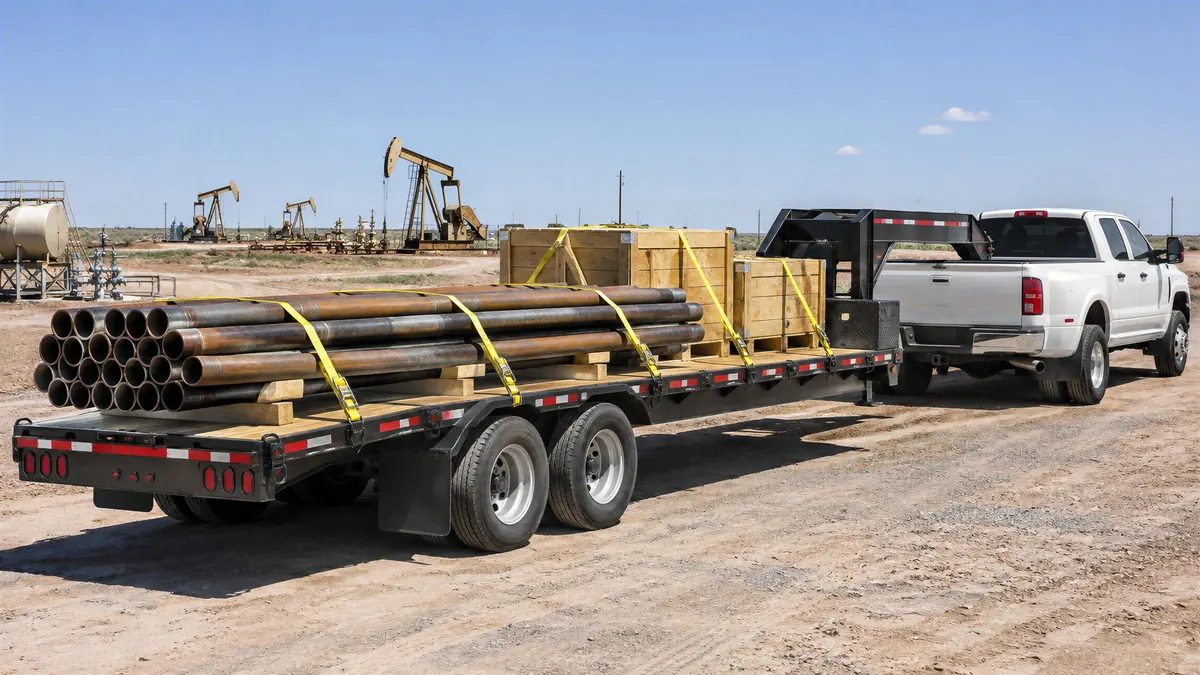
Hot shot trucking is hauling smaller loads, often on short notice, with a heavy-duty pickup truck and a trailer instead of a semi. It covers the loads that are too big for a van and too small to justify a tractor-trailer.
It is a common way into trucking, because a pickup and trailer cost far less to buy and run than a tractor-trailer and many setups do not require a commercial driver’s license. This guide explains how hot shot trucking works, what a hot shot driver does, the equipment involved, and the pros and cons.
Quick Overview
What it is: Hauling smaller loads with a pickup and trailer instead of a semi.
Equipment: A Class 3, 4 or 5 truck pulling a flatbed or gooseneck trailer.
Typical freight: Construction materials, farm and oilfield equipment, machinery and vehicles.
Who does it: Often owner operators, running under their own authority or leased to a carrier.
Why shippers use it: The load is too small to justify a semi, or it needs a truck on short notice.
Why drivers choose it: Lower startup cost and lower overhead than running a semi.
Where Hot Shot Trucking Came From
The term is usually traced to the oilfields of Texas and Louisiana. When a rig went down, every idle hour cost money, so drivers in pickups ran replacement parts straight out to the well. Overdrive dates the term to the 1950s and ’60s. Other sources put it in the 1970s.
The work has since spread to construction, agriculture, manufacturing and vehicle transport. You will see it written as both “hot shot” and “hotshot.” They mean the same thing.
How Hot Shot Trucking Works
A regular truckload moves on a Class 8 tractor with a 53-foot trailer. A hot shot load moves on a much smaller rig, typically a one-ton pickup with a flatbed trailer behind it.
A typical job looks like this:
- A shipper has a smaller load to move. A contractor needs materials on site, a dealer has a machine to deliver, or a plant is waiting on a replacement part.
- The load is posted or dispatched. It goes onto a load board, or a broker or dispatcher offers it to drivers directly.
- A driver takes it. The driver, or a dispatcher working for the driver, agrees on a rate, usually per mile.
- Pickup and delivery. The freight is loaded, secured and driven to its destination.
Some hot shot loads fill the trailer for a single shipper. Many do not: drivers often combine partial loads from different shippers to fill the deck. A car hauler, for example, may carry three vehicles for three different customers on one trip.
What Does a Hot Shot Driver Do?
A hot shot driver does more than drive. Many are owner operators, which means they run a small business from the driver’s seat. Some handle everything themselves. Others pay a dispatcher to find loads and negotiate rates so they can stay on the road.
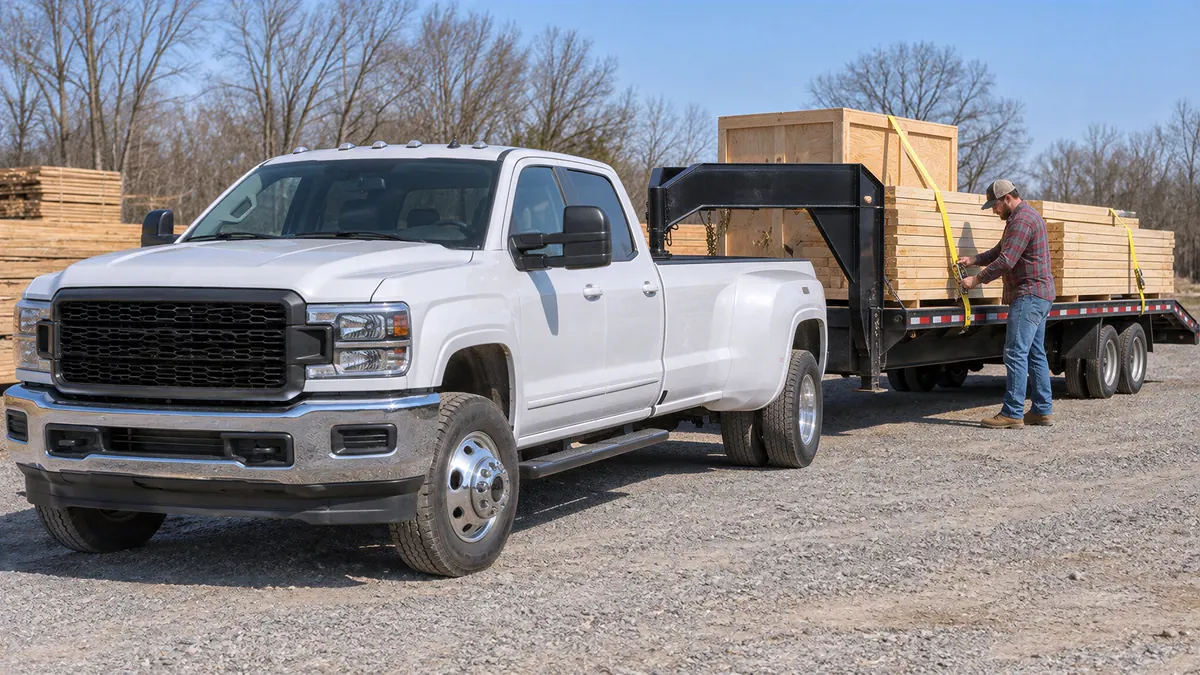
Day to day, a hot shot driver:
- Finds and books loads, or works with a dispatcher who does
- Negotiates rates with brokers and shippers
- Loads, straps and tarps the freight
- Plans routes and tracks driving hours
- Maintains the truck and trailer
- Handles invoicing, fuel costs and paperwork
Some drivers stay regional. Others run long distances and are away for days at a time. A pickup has no sleeper berth like a semi, so nights on the road usually mean paying for a hotel. Some drivers cut that cost by converting the back seat into a bed.
Hot Shot Trucks and Trailers
Hot shot rigs are built around heavy-duty pickups and cab-chassis trucks in Classes 3 to 5, which covers gross vehicle weight ratings from 10,001 to 19,500 pounds. A one-ton dually such as a Ford F-350, Ram 3500 or Chevrolet Silverado 3500 is a typical starting point.
The trailer matters just as much. ATS puts most hot shot trailers at 30 to 40 feet long although a lot of car haulers use 43ft trailers, and goosenecks are a popular choice for heavier loads. Some drivers pull a fifth-wheel trailer instead, which locks onto a plate hitch in the truck bed the way a semi trailer does.
What Do Hot Shot Trucks Haul?
Hot shot freight is anything that fits on the trailer and stays within the truck’s weight limits. Common loads include:
- Construction materials: lumber, steel, pipe and scaffolding
- Equipment: skid steers, mini excavators, generators and compressors
- Agricultural loads: tractors and implements
- Oilfield and industrial parts: pumps, valves and replacement machinery
- Vehicles: cars, side-by-sides and small boats
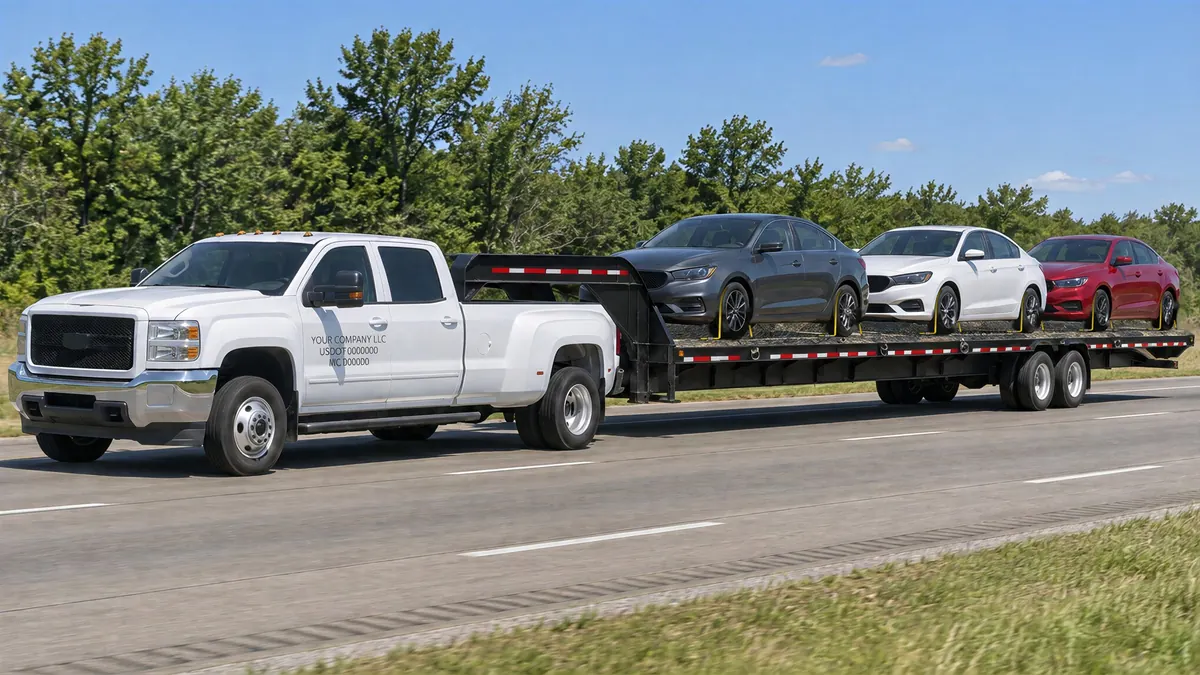
Some of these loads are urgent. When a job site or a plant is waiting on one item, paying for a truck to bring it now is cheaper than the downtime. Many are simply too small to justify a semi. Car hauling is a common hot shot niche, where a driver may carry two or three vehicles for different customers on one trailer.
Hot Shot Trucking vs. Regular Trucking
| Hot shot trucking | Regular (Class 8) trucking | |
|---|---|---|
| Truck | Class 3 to 5 pickup or cab-chassis | Class 8 tractor |
| Trailer | Flatbed or gooseneck, usually 30 to 43 feet | 48- or 53-foot van, reefer or flatbed |
| Load size | Smaller loads and partials | Up to a full truckload |
| Cost to start and run | Lower | Higher |
| CDL | Depends on weight | Required |
Hot shot trucking is not a way around trucking rules. A pickup and trailer rated over 10,000 pounds and used for business across state lines is a commercial motor vehicle, and FMCSA safety rules apply to it.
Hot Shot Trucking vs. Expedited Freight
The two are often confused because both handle smaller loads on short notice. The main difference is the equipment. Hot shot uses a pickup pulling an open trailer. Expedited freight usually moves in cargo vans, straight trucks or tractor-trailers.
What You Need to Run Hot Shot
Whether you need a CDL depends on weight. Under federal rules, a Class A CDL is required when the truck and trailer together are rated at (or weigh) 26,001 pounds or more and the trailer is over 10,000 pounds. Many drivers stay under that line and run “non-CDL hot shot.”
A CDL is only one piece. Even without one, driving a rig over 10,000 pounds across state lines means carrying a DOT medical card and following hours-of-service limits, usually logged on an electronic logging device (ELD). On the business side, a for-hire hot shot carrier that crosses state lines needs a USDOT number, operating authority (an MC number), a BOC-3 filing, liability insurance and an annual UCR filing.
How Hot Shot Drivers Find Loads
Drivers usually find freight in one of two ways. The first is load boards, where brokers and shippers post available loads. The second is a dispatcher, who finds and books loads for a fee. Many drivers also build direct relationships with shippers over time.
How Much Do Hot Shot Drivers Make?
ZipRecruiter puts the average hot shot driver’s pay at $58,947 a year as of November 2026, with most between $47,000 and $71,500. Those figures are for driver jobs. An owner operator’s income depends on miles, rates and expenses.
Pros and Cons of Hot Shot Trucking
For most drivers the main draw is cost, not speed. A pickup and trailer cost far less to buy than a tractor-trailer, and less to run.
Advantages
- ✅ Much lower startup cost than buying a semi
- ✅ Lower overhead than running a Class 8 truck
- ✅ Many setups can run without a CDL
- ✅ Flexible schedule, with more home time on regional runs
- ✅ A practical first step toward a larger trucking business
Challenges
- ❌ Income can be uneven, especially at the start
- ❌ Smaller loads mean less revenue per trip
- ❌ High mileage and constant towing are hard on a pickup
- ❌ Commercial insurance and compliance costs still apply
- ❌ No sleeper berth, so overnight runs usually mean a hotel bill
- ❌ Rates on load boards can be low when many drivers chase the same freight
Is Hot Shot Trucking Right for You?
Hot shot trucking tends to suit people who want to own a small business, know their way around trucks and trailers, and are willing to spend time on the phone and on paperwork as well as behind the wheel.
It is a poor fit if you need a steady paycheck from week one or have no savings to cover slow weeks and repairs.
For a broader view of the industry, see our guide on how to start a trucking company.
Frequently Asked Questions
Is it “hotshot” or “hot shot” trucking?
Both spellings are used and mean the same thing.
What is a hot shot driver?
A hot shot driver hauls smaller loads with a pickup truck and trailer instead of a semi. Many own their truck and run their own small business.
What is a hot shot load?
A load small enough to move on a trailer pulled by a pickup, such as a piece of equipment, a few pallets of materials or one to three vehicles.
What is a hot shot truck?
A heavy-duty pickup or cab-chassis truck in Class 3, 4 or 5, usually a one-ton dually, set up to pull a flatbed or gooseneck trailer.
Is hot shot trucking the same as expedited freight?
No. Hot shot uses pickups and open trailers. Expedited freight usually moves in cargo vans, straight trucks or tractor-trailers.
Conclusion
Hot shot trucking fills a real gap in freight: loads that are too small to justify a semi. For drivers, the main appeal is a much lower cost of entry and lower overhead, with more control over schedule and equipment. It is still a regulated trucking business, and the drivers who last are the ones who treat it that way, with the right equipment, the right registrations and a clear picture of their costs.